WHAT THE HUMAN STUDIES FOUND
In adults treated for HIV, tesamorelin studies checked fat near the belly organs and in the liver.
You’ll learn what researchers saw, which adults they studied, and the sole use cleared by the FDA.
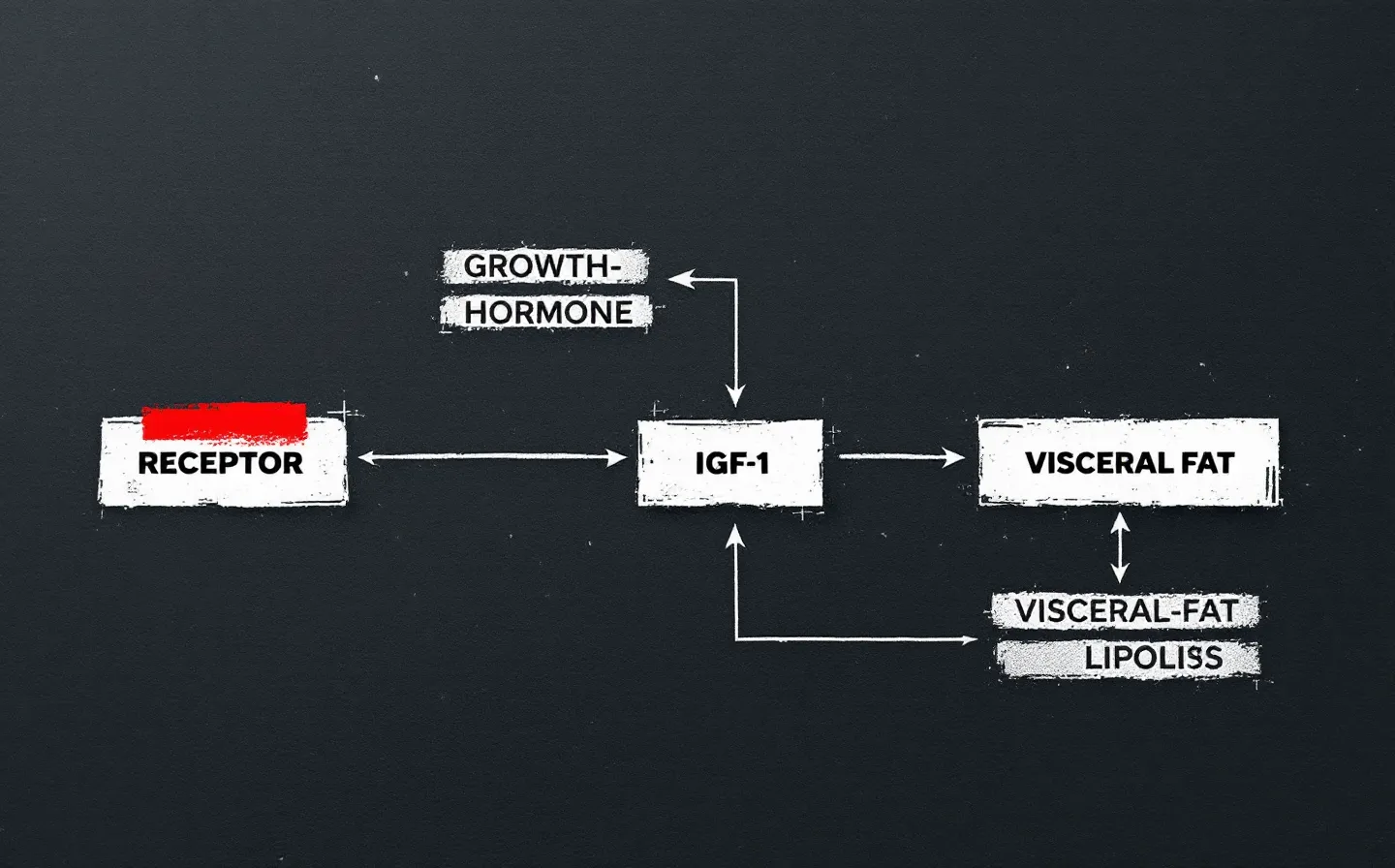
What did the tesamorelin studies measure?
The first checks covered fat near the belly organs and fat carried in blood. Another blood test measured IGF-1; the liver makes this protein after growth hormone rises. Tesamorelin copies the body’s order for a gland near the brain to release that hormone. It remains in the bloodstream longer than the body’s brief order. Doctors may use it for one approved reason: lowering belly-organ fat changed by HIV care. Uses beyond that aren’t approved.
What changed for people who received tesamorelin?
The large pre-approval test was a 412-patient Phase 3 study that lasted 26 weeks. Belly-organ fat fell 15.2% with tesamorelin but rose 5.0% after a placebo injection with no medicine. Triglycerides, a blood fat, fell 50 milligrams per deciliter, a tenth-liter measure that doctors read as a clear drop. IGF-1 rose 81.0%; this liver blood-test protein is tied to growth. The increase confirmed that the drug acted; by itself, the test could not settle your benefit or safety [1]. All the adults had HIV-related fat changes and took HIV medicine.
Tesamorelin is a peptide with a 44-amino-acid chain. Amino acids are the small parts that make proteins. One end is altered so a blood enzyme cannot destroy the natural message too soon [11]. Tesamorelin doesn’t supply growth hormone; instead, your gland sends out hormone that is already in your body [12].
The largest loss occurred around the belly organs, while the fat layer near the skin barely moved. A 2026 review brought together five studies. On scans, the marked area for organ fat was 27.71 cm², or square centimeters, smaller on average. The reviewers were 95% sure the true average loss was between 17.06 and 38.37 square centimeters. Liver fat fell 4.28%, while lean tissue rose 1.42 kilograms. Reviewers judged that chance alone was an unlikely reason for these results [15].
Which tesamorelin findings may matter to you?
The firmest result was a smaller fat store beside the organs in the belly. Studies also found lower triglycerides, the fats carried in your blood. IGF-1 rose; the liver releases this protein, which is tied to growth. Liver scans showed a fat drop as well. Every adult studied had HIV-related body changes, so the findings don’t promise weight loss for you.
Belly-organ fat fell 15.2% by 26 weeks and remained about 18% lower through 52 weeks of continued use [1][2]. Triglycerides fell 50 milligrams per deciliter. The placebo group had a rise of 9 milligrams per deciliter [1]. The tesamorelin and liver fat page explains the liver work. No large fat-loss study has covered adults without HIV [12].
Is tesamorelin a steroid, or a peptide?
Tesamorelin is a peptide, not a steroid. Peptides are chains of amino acids, the parts used to build proteins. Steroids have a ring-shaped structure instead. Tesamorelin’s 44-residue chain is an amino-acid chain; residue is the lab word for one part [11].
The two drug types work in separate ways. Tesamorelin prompts a small gland near your brain, which moves growth hormone through your bloodstream. In response, IGF-1 rises; the liver makes this protein [4]. The drug adds no steroid hormone to your body.
What did the FDA approve tesamorelin to treat?
The approval is narrow. In 2010, United States regulators approved tesamorelin for one use [5]. The drug can lower added belly fat if you are an adult with HIV-related fat changes.
Weight loss for looks, anti-aging use, sports use, and fatty-liver care without HIV are off-label. Using the drug only to raise growth hormone is off-label too. That means the FDA didn’t clear those uses. The FDA-approval scope page gives you the full limit. Sports authorities ban tesamorelin because it changes the body’s growth-hormone system. The ban applies during and between events.
Where can you check the tesamorelin facts?
Each number comes from a published study or an FDA paper. We name the adults studied and the length of their follow-up. The dose used in the trials page gives the study amount and the drug’s time in blood. The side effects and FDA warnings are answered together. Every paper is available in the complete source list, so you can check uses beyond FDA approval.